Polar and mountain climates
Where summer barely turns up, and where the climate changes as you climb.
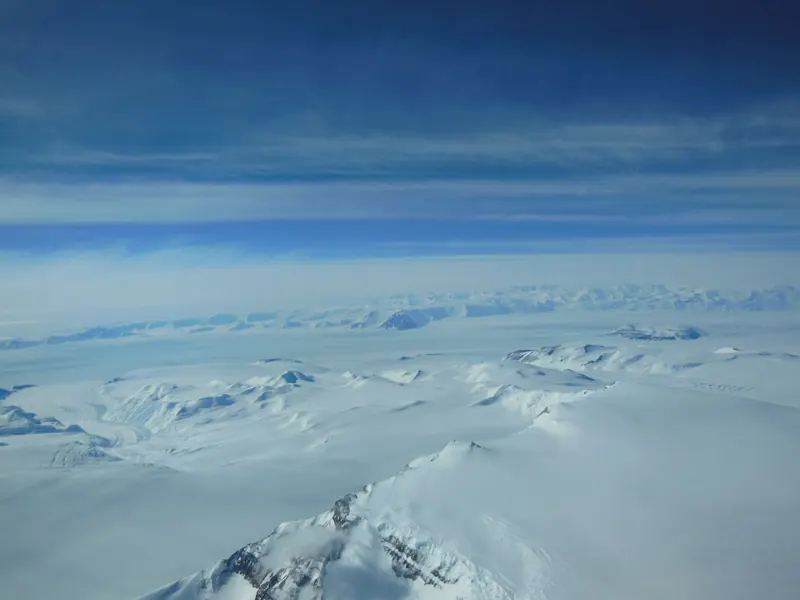
Polar climates
A polar climate has no month averaging above 10 °C. Met Office: Climate zones E climates are ruled by polar and Arctic air, at 60° and beyond. Encyclopaedia Britannica: Köppen climate classification
Rule for E: the warmest month is below 10 °C. ET: warmest month above 0 °C. EF: warmest month 0 °C or below. Encyclopaedia Britannica: Köppen climate classification
Polar climates reach the far north of Canada and Russia, Greenland, and the Arctic and Antarctic. Met Office: Climate zones
Ice cap (EF)
In an ice cap climate no month averages above 0 °C. Plants can’t grow, and snow and ice pile up until they flow away as glaciers. Met Office: Climate zones
Ice cap climates also turn up very high up, such as on the highest Himalayan peaks. Met Office: Climate zones
Tundra (ET)
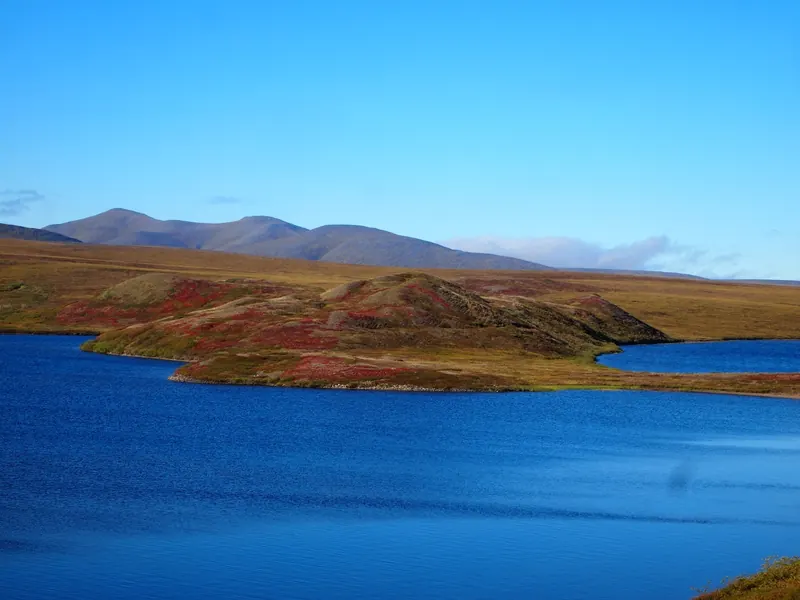
If the warmest month averages between 0 °C and 10 °C, it is tundra: too short a growing season for trees, so dwarf shrubs, grasses and small plants instead. Met Office: Climate zones
The tundra climate lies between 60° and 75° latitude, mostly along the Arctic coasts of North America and Eurasia and the edges of Greenland. Encyclopaedia Britannica: tundra climate Northern Canada and Eurasia have some of the largest areas of tundra, and it also turns up on sub-Antarctic islands. Met Office: Climate zones
Tundra winters are long: temperatures can stay below 0 °C for 6 to 10 months. Encyclopaedia Britannica: tundra climate Tundra summer days can reach 15–18 °C, but the warmest month still averages under 10 °C. Encyclopaedia Britannica: tundra climate
Tundra usually gets less than 35 cm of rain and snow a year. Encyclopaedia Britannica: tundra climate
Where the yearly mean is −9 °C or colder, the ground deep down stays frozen all year: permafrost. Encyclopaedia Britannica: tundra climate
Tundra animals include reindeer, musk ox and Arctic hare. Met Office: Climate zones
Mountains (H)
Köppen didn’t include mountains as their own group, but a highland group, H, is sometimes added for land above 1,500 metres. Encyclopaedia Britannica: Köppen climate classification Highland climates were not part of Köppen’s own systems; the H group was added later for mountain areas. Encyclopaedia Britannica: highland climate
As a rough guide, mountains are like cooler, wetter versions of the lowland climates near them. Encyclopaedia Britannica: highland climate NOAA describes highland climates as changing quickly over short distances as the ground rises. NOAA JetStream: Climate zones
Going up, temperature, air pressure, humidity and dust all fall. Encyclopaedia Britannica: highland climate
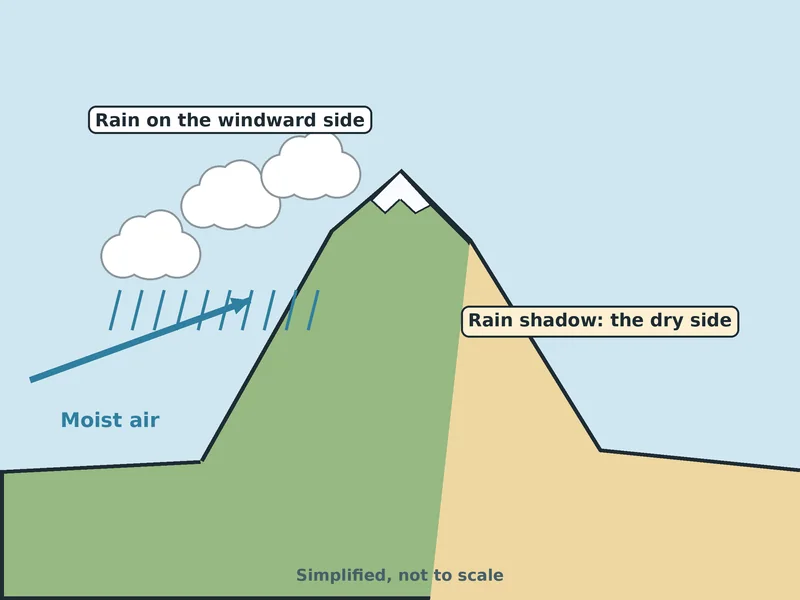
Mountains block moving air. The drier side downwind is called a rain shadow. Encyclopaedia Britannica: highland climate Cold air can slide down from the heights and collect in low valleys as “frost pockets”. Encyclopaedia Britannica: highland climate
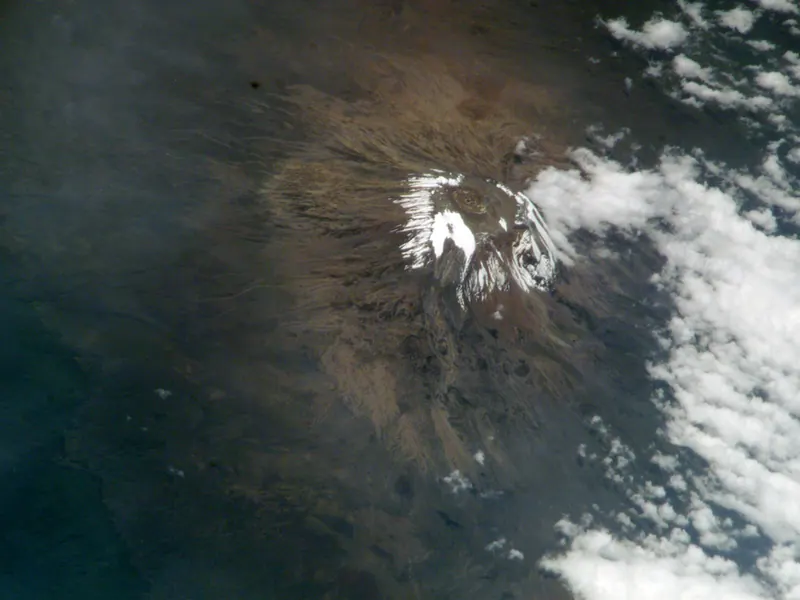
The snow line ranges from sea level in the subarctic to about 5,500 metres. Encyclopaedia Britannica: highland climate
When tundra climate happens high on mountains, it is usually called an Alpine climate. Met Office: Climate zones The summits of Ben Nevis and Cairn Gorm in Scotland are in the tundra climate zone. Met Office: Climate zones
Next: why zones differ →