The Köppen letters
A German scientist, a stack of world maps, and a code of up to three letters that still sorts the planet’s climates.
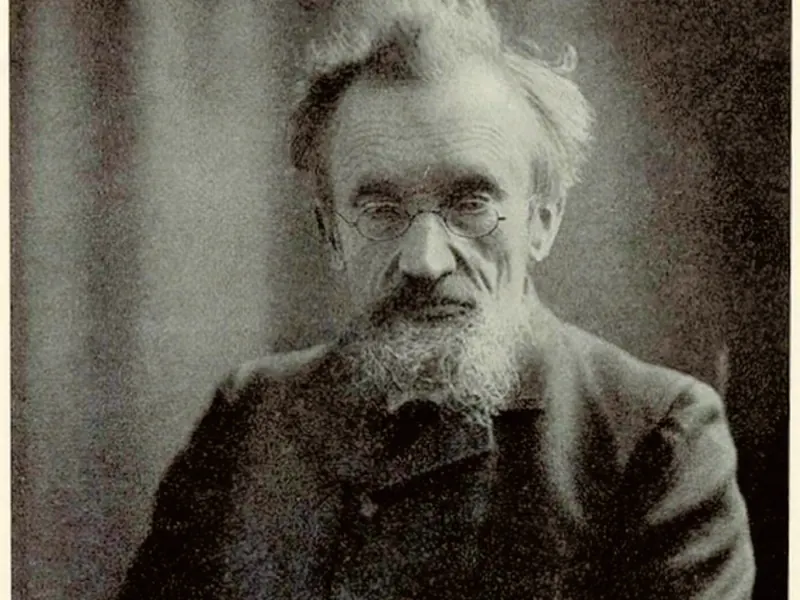
Who was Köppen?
Wladimir Köppen lived from 1846 to 1940. NOAA calls him a German climatologist and amateur botanist. NOAA JetStream: Climate zones The climatologist Wladimir Köppen first developed his climate classification in 1884, and scientists all over the world still use versions of it. Met Office: Climate zones
Köppen published his first full scheme in 1900 and a revised version in 1918, and kept revising it until he died in 1940. Encyclopaedia Britannica: Köppen climate classification
Köppen worked with Rudolf Geiger, which is why it is often called the Köppen-Geiger system. NOAA JetStream: Climate zones
Köppen wanted his climate boundaries to line up with the vegetation zones (biomes) that were being mapped for the first time in his lifetime. Encyclopaedia Britannica: Köppen climate classification
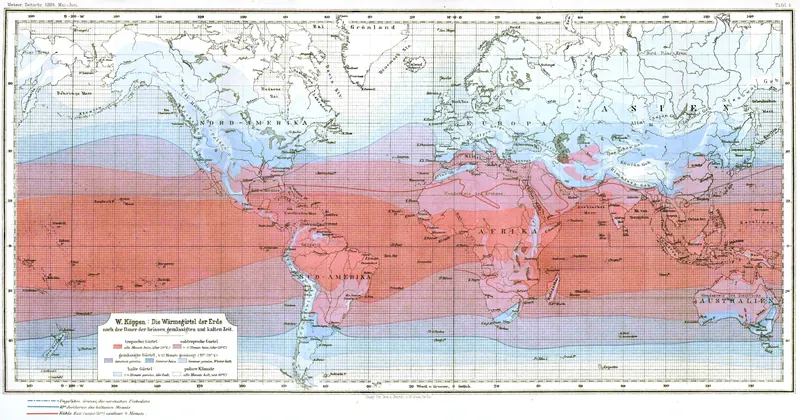
The five groups
The Köppen system is one of the most widely used ways of sorting climates into zones. Met Office: Climate zones Köppen sorts climates into five main groups: tropical (A), dry (B), temperate (C), continental (D) and polar (E). Met Office: Climate zones
| Letter | Group | Rule |
|---|---|---|
| A | Tropical | Coolest month 18 °C or more Encyclopaedia Britannica: Köppen climate classification |
| B | Dry | Too little rain for the temperature (the dryness test comes first) Encyclopaedia Britannica: Köppen climate classification |
| C | Temperate | Warmest month 10 °C or more; coldest below 18 °C and above −3 °C Encyclopaedia Britannica: Köppen climate classification |
| D | Continental | Warmest month 10 °C or more; coldest −3 °C or lower Encyclopaedia Britannica: Köppen climate classification |
| E | Polar | Warmest month below 10 °C Encyclopaedia Britannica: Köppen climate classification |
Group B is the odd one out: it is defined by dryness, while every other group is defined by temperature. Encyclopaedia Britannica: Köppen climate classification Evaporation is hard to measure, so Köppen used temperature as a stand-in for it in his dryness formula. Encyclopaedia Britannica: Köppen climate classification
Any climate that passes the dryness test is a B, whatever else it is like. Encyclopaedia Britannica: Köppen climate classification
The second and third letters
Each group is then split up, first by when the rain falls in the year and then by temperature. Met Office: Climate zones
Tropical climates come in three kinds: Af (no dry season), Am (a short dry season) and Aw (a dry winter). Encyclopaedia Britannica: Köppen climate classification
Dry climates are split into arid (BW) and semi-arid (BS), with h added for warm and k for cold. Encyclopaedia Britannica: Köppen climate classification
C and D climates get a second letter: f for no dry season, w for a dry winter, s for a dry summer. Encyclopaedia Britannica: Köppen climate classification A third letter, a, b, c or d, describes how warm the summer is or how cold the winter is. The d only turns up in D climates. Encyclopaedia Britannica: Köppen climate classification
Polar climates are split into tundra (ET) and snow and ice (EF). Encyclopaedia Britannica: Köppen climate classification
- Af: the driest month still gets at least 60 mm of rain. Encyclopaedia Britannica: Köppen climate classification
- Am: the driest month gets under 60 mm, but at least 100 minus the yearly rainfall divided by 25. Encyclopaedia Britannica: Köppen climate classification
- BW (desert): rainfall is under half the dryness limit. BS (steppe): between half and the full limit. Encyclopaedia Britannica: Köppen climate classification
- In dry climates, h means a yearly mean of 18 °C or more, and k means under 18 °C. Encyclopaedia Britannica: Köppen climate classification
- s (dry summer): the driest summer month gets under 30 mm and less than a third of the wettest winter month. Encyclopaedia Britannica: Köppen climate classification
- w (dry winter): the driest winter month gets less than a tenth of the wettest summer month. Encyclopaedia Britannica: Köppen climate classification
- Third letters: a, warmest month 22 °C or above; b, at least four months of 10 °C or more but warmest under 22 °C; c, one to three months of 10 °C or more. Encyclopaedia Britannica: Köppen climate classification
- d: the coldest month is below −38 °C. Encyclopaedia Britannica: Köppen climate classification
- Rule for E: the warmest month is below 10 °C. ET: warmest month above 0 °C. EF: warmest month 0 °C or below. Encyclopaedia Britannica: Köppen climate classification
- In the rules, the “summer half” of the year means April to September in the northern hemisphere and October to March in the southern. Encyclopaedia Britannica: Köppen climate classification
Much of the UK is Cfb: temperate (C), with no dry season (f) and a warm summer (b). Met Office: Climate zones
Two lines, two sources
Not every source draws the line between temperate and continental climates in the same place. Rule for C: warmest month 10 °C or more, coldest month below 18 °C but above −3 °C. Encyclopaedia Britannica: Köppen climate classification The Met Office describes temperate climates with a 0 °C line instead: coldest month between 0 °C and 18 °C, at least one month above 10 °C. Met Office: Climate zones NOAA describes D climates with the −3 °C line: warmest month above 10 °C, coldest month below −3 °C (27 °F). NOAA JetStream: Climate zones
Mountains: the H
Köppen didn’t include mountains as their own group, but a highland group, H, is sometimes added for land above 1,500 metres. Encyclopaedia Britannica: Köppen climate classification
Highland climates were not part of Köppen’s own systems; the H group was added later for mountain areas. Encyclopaedia Britannica: highland climate
Is it any good?
Critics point out that droughts and cold snaps can matter to plants as much as the averages Köppen used. Encyclopaedia Britannica: Köppen climate classification Other critics say sunshine and wind matter to plants too, and Köppen’s scheme leaves them out. Encyclopaedia Britannica: Köppen climate classification
Even so, Britannica calls Köppen’s system the most popular climate classification in use today. Encyclopaedia Britannica: Köppen climate classification
Britannica’s table of the rules is adapted from Critchfield’s General Climatology (1983) and a 2007 world map by Peel, Finlayson and McMahon. Encyclopaedia Britannica: Köppen climate classification
Want to try the rules? The Climate Maker applies them step by step, and the Köppen Code Puzzle Pack in our shop has seven mystery places to classify on paper.
Next: tropical climates →